
As the global shift towards renewable energy intensifies, geothermal energy has moved from a “niche alternative” to a “baseload essential.” Unlike solar or wind, geothermal provides a constant 24/7 power supply, but harvesting it requires something much more difficult than installing panels: drilling deep, hot, and through unforgiving formations.
For contractors and equipment manufacturers, the “Geothermal Boom” isn’t just a market opportunity; it’s a technical challenge. To succeed in this high-stakes environment, drilling setups must evolve beyond standard water well specs.
1. The Need for “Heavy-Duty” Precision
In geothermal applications—whether it’s residential Ground Source Heat Pumps (GSHP) or large-scale industrial wells—the depth often exceeds standard irrigation bores. We are seeing a demand for rigs that can handle deeper loads without a massive footprint.
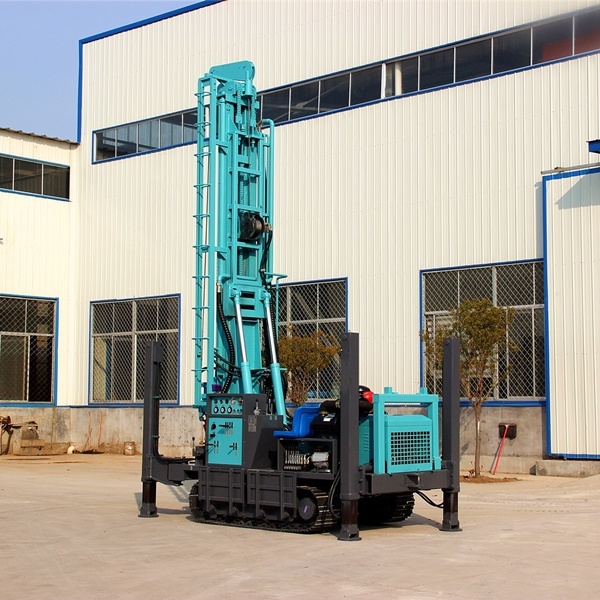
This is where specialized units like the Shanxi Kaishan drilling rig come into play. These drilling rigs aren’t just “water well drillers” rebranded; they are engineered with high-torque rotation heads and reinforced telescopic booms. In geothermal drilling, maintaining hole verticality over 300+ meters is critical—any deviation can make inserting heat exchange loops a nightmare.
2. Air Power: The Heart of the Operation
If the rig is the muscle, the air compressor is the heart. Geothermal drilling often involves hard rock (granite, basalt) where DTH (Down-the-Hole) hammers are the only viable tool.
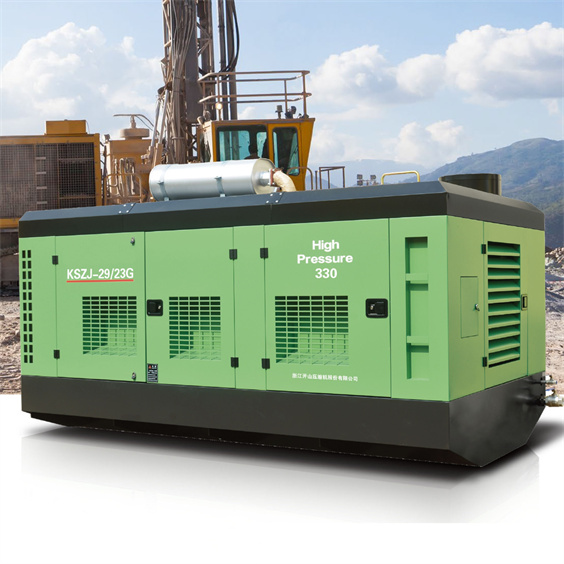
Standard air compressors often choke when asked to maintain high pressure at significant depths. Modern manufacturers now have to deliver dual-stage high-pressure screw air compressors that can sustain 25–35 bar pressure consistently.
Kaishan’s LGCY or KSZJ series compressors have become a staple in this field for two reasons:
Fuel Efficiency: Drilling a 400m geothermal well takes time. A compressor that burns 15% less fuel can save a contractor thousands of dollars on a single project.
Heat Management: Geothermal sites are often in harsh environments. Integrated after-coolers and heavy-duty filtration are no longer optional—they are essential to prevent the “varnishing” of the air-end during 24-hour operations.
3. Mobility Meets Stability
Geothermal projects often take place in established residential areas or remote mountainous terrain. This creates a paradox: you need a drilling rig powerful enough to drill deep, but compact enough to fit in a backyard or on a narrow mountain trail.
The shift toward crawler-mounted designs with hydraulic leveling legs has been the industry’s answer. Rigs like the Shaanxi Kaishan drilling rig allow operators to set up on uneven ground in minutes, ensuring the stability needed for the high-impact percussion of DTH drilling without the need for a massive concrete pad.
The Bottom Line
The geothermal boom is rewarding manufacturers who prioritize reliability over price. When you are 300 meters down, an equipment failure doesn’t just stall the day—it risks the entire well.
As we look toward 2026, the winners in this sector will be those providing integrated solutions: rigs that handle the torque, and compressors that provide the “breath” to clear cuttings from the deepest bores.
Post time: Dec-25-2025


